-
Resources Information Disclaimer
-
The Statements and Guidelines expressed as endorsed on this website have been endorsed as general documents, appropriate having regard to the general circumstances to which they apply at the time of their endorsement. It is the responsibility of the user to have express regard to the particular circumstances of each case, and the application of the Statements and Guidelines in each case.
-
GESA’s endorsement is applicable at the time at which the endorsement is expressed. The Statements and Guidelines, developed by third parties, may be reviewed and updated from time to time. GESA does not necessarily take responsibility for reviewing its endorsements, and it is the responsibility of the user to ensure that they have obtained the current version, or are aware of more recent or more appropriate Statements and Guidelines.
-
The Statements and Guidelines have been prepared having regard to the information available at the time of their preparation (and applicable at the time of GESA’s endorsement), and the user should therefore have regard to any information, research or other material which may have been published or become available subsequently. GESA takes no responsibility in this case.
-
Whilst GESA endeavours to ensure that professional documents are as current as possible at the time of their endorsement, it takes no responsibility for matters arising from changed circumstances or information or material which may have become available subsequently.
-
The endorsement of GESA does not imply that the Statements and Guidelines are applicable in all cases, or in any particular case, but are general policy documents that may provide guidance for users. Users should use their own judgment and consider the particular circumstances of each case.
-
Cirrhosis Care Bundle 2022
-
Colonoscopy Clinical Care Standard 2025
-
More than 900,000 colonoscopies are performed in Australia annually. The Colonoscopy Clinical Care Standard, published by the Australian Commission on Safety and Quality in Health Care, describes the safe, appropriate and high-quality use of colonoscopy.
-
The Colonoscopy Clinical Care Standard includes nine quality statements and a set of indicators for safe and appropriate care. Please visit the Australian Commission on Safety and Quality in Health Care webpage for further information and to access the available resources.
-
Crohn's Disease - Digital Self Assessment
-
From 1st December 2025, prescribers will be able to submit online PBS Authority requests for all severe Crohn’s disease (18+ years) and fistulising Crohn’s disease indications. This will apply to the following medicines: adalimumab, infliximab, upadacitinib, ustekinumab and vedolizumab.
-
Services Australia has also released a Crohn’s disease item-code quick reference (“cheat sheet”) to support the transition to digital processing. Written applications will still continue to be accepted during a transition period.
-
Download the item code "Cheat Sheet"
-
Download the information sheet
-
Economic Cost and Health Burden of Liver Disease in Australia 2013
-
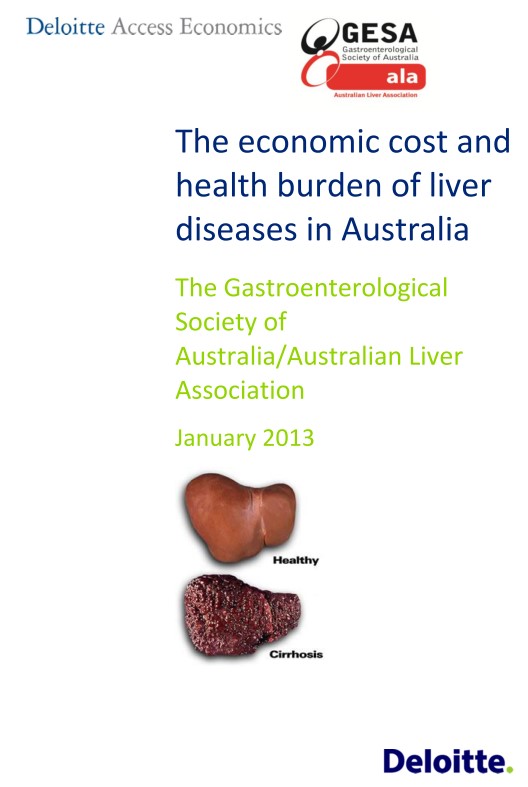 GESA commissioned Deloitte Access Economics to calculate the prevalence, mortality and economic cost of liver diseases in Australia.
Diseases considered included hepatitis A, B and C; non-alcoholic fatty liver disease (NAFLD); liver cancer; alcoholic liver disease; cholestatic autoimmune liver disease, comprising primary biliary cirrhosis (PBC) and primary sclerosing cholangitis (PSC); haemochromatosis and paediatric liver disease.
-
The Economic Cost and Health Burden of Liver Disease in Australia (Jan 2013)
-
Endoscopy Handbook 2017
-
 GESA’s Endoscopy Handbook – 2nd Edition (updated June 2017) provides a comprehensive guide to best practice endoscopy in Australia and is an indispensable resource to any endoscopy unit whether it be a small private day surgery or a tertiary referral centre.
The handbook was developed by editors Associate Professor Ian Norton and Professor Michael Bourke in collaboration with a group of expert endoscopists and nurses. It covers topics and details related to the field and best practice of endoscopy including colonoscopy insertion through to withdrawal technique and management of variceal bleeding to benign biliary strictures. The handbook provides readers with charts, tables and high-quality histological and endoscopic images in full detail for reference.
Electronic Copy - AUD $75 inc GST
Purchase an electronic copy of the Endoscopy Handbook.
-
Endoscopy - Infection Control: CPE Consensus Statements 2017
-
Infection Control in Endoscopy: 2017 Infection Control in Endoscopy Consensus Statements on Carbapenemase–producing Enterobacteriaceae (CPE) - summary
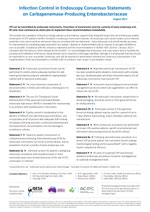
Endoscopy is a well-recognised diagnostic and therapeutic tool. It is a medical procedure that allows health professionals to inspect, view and investigate the inside of a patient’s body without the need to perform major surgery via a long, flexible tube that has a camera on one end. Due to the potential risk associated with inserting medical tools into a patient’s body, standards must be followed at all times. A breach of protocol leading to transmission of infection has the potential to harm patients and/or endoscopy personnel.
-
The GESA Consensus Statement Flyer: Infection Control in Endoscopy Consensus Statements on Carbapenemase-Producing Enterobacteriaceae (2017) details the importance of infection control in endoscopy. Circumstances in which an endoscopy-related infection might occur are discussed, as are measures to prevent infection, including endoscope reprocessing, antibiotic prophylaxis, and protection of endoscopy personnel.
Practitioners, endoscopists, endoscopy nurses and associates should use these guidelines as an aid in relation to disinfection and sterilisation practices and not as a complete or authoritative statement of such procedures.
This clinical update has been prepared by a combined Committee of GESA and Gastroenterological Nurses College of Australia (GENCA).
Contributions were also made by representatives of the Thoracic Society of Australia and New Zealand and the Australasian Society for Infectious Diseases. It was prepared under the chairmanship of Dr. Andrew Taylor.
Specific recommendations are based on relevant published information and will be updated periodically as new information becomes available.
-
GESA Position Statement on Infection Control in Endoscopy Guidelines (3rd Edition) - August 2016
-
Endoscopy - Infection Prevention and Control 2025 Update
-
 The 2025 update of Infection Prevention and Control in Endoscopy was developed in partnership by GESA and GENCA. A multidisciplinary committee of representatives from the Australasian College of Infection Prevention and Control, Australasian Society for Infectious Diseases and Federation of Sterilizing Research and Advisory Councils of Australia collaborated on this project.
-
-
Haemochromatosis Clinical Update 2021
-
Handbook of Clinical Pancreatology 2021
-
 The Second Edition of the Handbook of Clinical Pancreatology, an educational resource developed under the auspices of GESA, is now available from the Google Play Store and Apple Books.
The editor, Ben Devereaux, presents an up to date, succinct guide rather than a definitive textbook. It is a resource you can refer to in the lecture hall, hospital ward or consulting room. The Handbook is also an invaluable resource for medical students, doctors in training and experienced clinicians.
Three new chapters have been added to complete the scope of the Handbook; Paediatric Clinical Pancreatology, Cystic Fibrosis and the Pancreas and Diabetes of the Exocrine Pancreas.
Each chapter is now co-authored by an Australian and international expert. Pancreatologists from around the globe (Scotland, England, France, Germany, India, Thailand, New Zealand, USA and Canada) agreed to contribute to the Handbook. This emphasises that the challenges of understanding the complexities of pancreatic physiology and thereby optimising the care of patients enduring an array of pancreatic pathologies is shared by colleagues across the world. The necessity of a multidisciplinary approach to the treatment of patients remains a consistent theme as reflected by the breadth of expertise amongst the authors.
-
HCC Consensus Statement 2020
-
Hepatitis B - Presentations
-
Hepatitis B Virus (HBV) Consensus Statement 2022
-
Hepatitis C Virus (HCV) Consensus Statement 2022
-
Hepatitis C Management Summary & Consultation Request Form 2022 – GP Resource
-
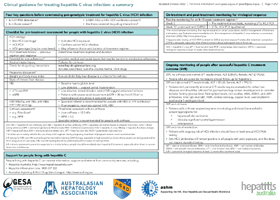 The wallchart for GPs summarising clinical guidance for treating Hepatitis C virus infection with a checklist for pre-treatment assessment of people with Hepatitis C virus infection has been updated based on the amendments in the HCV Consensus Statement 2022.
- An updated 'Remote Consultation Request for Initiation of Hepatitis C Treatment' is available as PDF or Word document
-
-
-
Hepatitis C in Children 2024 update – GP and Physician Resources
-
Hepatitis C - Consensus Statement on the Management of Hepatitis C in Australia’s Prisons 2022
-
Inflammatory Bowel Disease (IBD) Living Clinical Guidelines
-
Inflammatory Bowel Disease (IBD) Advanced Therapies Prescription Guide
-
Inflammatory Bowel Disease (IBD) and Biologics - GP Resource
-
Information and resources to optimise the safety and health outcomes of biologics and targeted small molecule medicines for inflammatory bowel disease (IBD) developed in collaboration with NPS MedicineWise.
-
Access online resources, decision aids and action plans on the NPS webpage.
-
Inflammatory Bowel Disease (IBD) - Faecal Calprotectin
-
Inflammatory Bowel Disease (IBD) for GPs and Physicians (online education) – GP Resource
-
Inflammatory Bowel Disease (IBD) Management Overview – GP Resource
-
Inflammatory Bowel Disease (IBD) in Pregnancy
-
Inflammatory Bowel Disease (IBD) in Primary Care and Beyond - GP Resource
-
Advice on best practice for management of IBD developed in collaboration with NPS MedicineWise.
-
Access round table discussion key points, case studies and useful resources on the NPS webpage.
-
Iron Deficiency Clinical Update 2022
-
 Iron deficiency is the most common nutritional deficiency worldwide and accounts for about half of the global burden of anaemia. It may also result in fatigue, reduced cognitive function, hair loss, glossitis, stomatitis or restless legs in the absence of anaemia.
Iron deficiency may occur at all ages, but particularly susceptible groups include children, women after the onset of menstruation, elderly people, vegetarians (especially vegans) and disadvantaged populations, such as Indigenous Australians, refugees, recent migrants and people in institutions.
The Iron Deficiency Clinical Update 2022 covers basic iron physiology, causes of iron deficiency, risk groups, symptoms, prognosis, management and prevention of the condition.
-
Management of Patients with Disorders of Gut-Brain Interaction and Altered (Reduced) Food Intake Behaviour 2025
-
 The statements and guidelines expressed as endorsed on the GESA website have been endorsed as general documents having appropriate regard to the general circumstances to which they apply at the time of their endorsement. It is the responsibility of the user to have express regard to the particular circumstances of each case and to the application of the statements and guidelines in each case.
GESA’s endorsement is applicable at the time at which the endorsement is expressed. The statements and guidelines, developed by third parties, may be reviewed and updated from time to time. GESA does not take responsibility for reviewing its endorsements. It is the responsibility of the user to ensure they have obtained the current version and are aware of more recent or more appropriate statements and guidelines.
The statements and guidelines have been prepared with regard to the information available at the time of preparation (and applicable at the time of GESA’s endorsement) and the user should therefore have regard to any information, research or other material which may have been published or become available subsequently. GESA takes no responsibility in this case.
GESA aims to ensure that professional documents are as current as possible at the time of their endorsement. GESA takes no responsibility for matters arising from changed circumstances or information or material which may have become available subsequently.
-
Read the DGBI-induced altered food intake behaviour guideline
-
Metabolic Dysfunction-Associated Fatty Liver Disease (MAFLD) Consensus Statement 2024
-
Sepsis Clinical Care Standard 2022
-
Sepsis Clinical Care Standard (2022)
-
The Sepsis Clinical Care Standard, developed by the Australian Commission on Safety and Quality in Health Care, will help to ensure sepsis is recognised early and patients receive coordinated, best-practice care so that the risk of death or ongoing morbidity is reduced.
-
Surgical Risk for Patients with Cirrhosis 2022
-
 Surgical risk for patients with liver cirrhosis depends on the type and anatomical site of the proposed surgical procedure, severity of liver disease and presence of comorbid conditions. In patients being considered for surgery, CTP score, MELD score, Mayo postoperative mortality risk score, HVPG or VOCAL-Penn score can provide reasonable estimations of surgery-related mortality.
-
Clinical Update: Surgical Risk for Patients with Cirrhosis 2022
-
Sustainability
-
TDM of Anti-Tumour Necrosis Factor Therapy in IBD Consensus Statements 2017
-
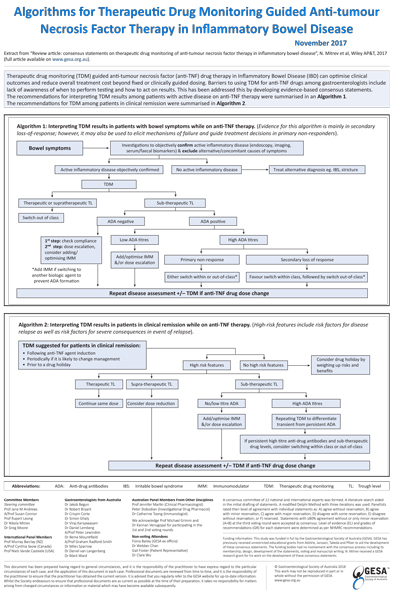 A wall chart for medical practitioners outlining algorithms for the interpretation of TDM results may be downloaded here.
Review Article by N. Mitrev et al - published in AP&T Alimentary Pharmacology &Therapeutics, 2017.
-
-
-
-
Understanding Liver Tests 2024


